
Is Herbalife Good for Cholesterol? The Real Science, Explained
By Dogus Dilan, Herbalife Independent Wellness Coach · Last updated 9 August 2026
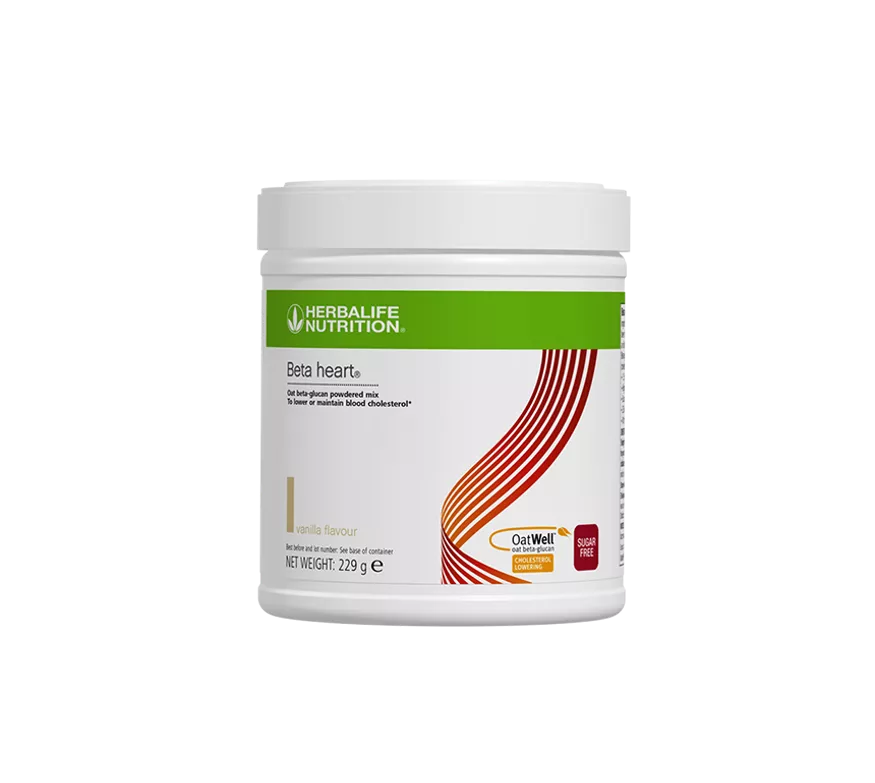
One Herbalife product has a genuine, peer-reviewed evidence base for cholesterol: Beta Heart, built on OatWell® oat beta-glucan. Two scoops deliver 3g of beta-glucan — the exact daily amount studied in a 2014 meta-analysis of 28 randomised controlled trials, which found it reduces LDL cholesterol by an average of 0.25 mmol/L. This is a genuinely authorised EU/UK health claim, not marketing language. Other Herbalife products people often assume help with cholesterol — like the Omega-3 supplement Herbalifeline Max — actually carry different, unrelated claims (blood pressure and triglycerides, not cholesterol). We break down exactly what the science supports and what it doesn’t.
Why Oat Beta-Glucan Specifically
Beta-glucan is a soluble fibre that forms a gel-like substance in the gut. This gel traps bile acids (which are made from cholesterol), meaning your liver has to pull more cholesterol out of your bloodstream to replace them — the mechanism behind the cholesterol-lowering effect. It’s not a Herbalife-specific claim; it’s a well-established property of oats and barley, which is why the British Heart Foundation recommends it as one of its core cholesterol-lowering food groups.
The threshold that matters is 3g of beta-glucan a day. According to the BHF, a bowl of porridge made with 40g of oats provides only around 1.4g — meaning you’d need roughly two large bowls to hit the target through whole oats alone. Two scoops of Beta Heart provides the full 3g in one serving.
What the Clinical Research Actually Shows
A 2014 meta-analysis published in the American Journal of Clinical Nutrition, pooling 28 randomised controlled trials, found that adding at least 3g of oat beta-glucan a day reduced LDL (“bad”) cholesterol by an average of 0.25 mmol/L and total cholesterol by 0.30 mmol/L, with no significant change to HDL cholesterol or triglycerides (Whitehead et al., 2014). A separate systematic review and meta-analysis published in the British Journal of Nutrition found a similar effect at a median dose of 3.5g/day over a median 6-week period (Ho et al., 2016).
This is why “oat beta-glucans contribute to the maintenance of normal blood cholesterol levels” and “oat beta-glucan has been shown to lower/reduce blood cholesterol” are genuine authorised health claims under EU/UK nutrition and health claims law (Regulation (EC) No 1924/2006) — one of the relatively small number of claims in the entire supplement industry backed by this volume of peer-reviewed evidence, rather than a single small trial.
What Doesn’t Count: Correcting a Common Mix-Up
It’s easy to assume that Herbalifeline Max, Herbalife’s omega-3 (EPA/DHA) supplement, also helps with cholesterol — fish oil and heart health tend to get mentally grouped together. But its actual authorised claims are for normal heart function, maintenance of normal blood pressure, and maintenance of normal blood triglyceride levels — triglycerides and cholesterol are different blood lipids, and omega-3 does not carry an authorised cholesterol-lowering claim. If cholesterol specifically is your concern, Beta Heart is the product with the relevant evidence — not the omega-3 range.
Nutritional Information
Serving size: 1 scoop (7.625g). Servings per container: 30.
* Beta-glucans contribute to the total fibre amount shown above.
Ingredients
Oat bran powder (89%), sunflower oil, maltodextrin, sodium caseinate (milk) and flavouring.
Contains oat and milk. May also contain other gluten sources (wheat, rye, barley).
How to Use It
🥤 1–2 Scoops, Once a Day
Gently shake the canister before each use. Mix 1 or 2 scoops with water, fruit juice, or add it to your Formula 1 shake, once a day.
📅 Consistency Matters More Than Timing
The clinical evidence behind beta-glucan and cholesterol is based on daily intake over several weeks, not a single serving. The beneficial effect is obtained with a daily intake of 3g of oat beta-glucan — that means 2 scoops, taken consistently, is what the research actually supports.
An Important Caveat
Herbalife’s own label carries a notice worth repeating in full: coronary heart disease has multiple risk factors, and altering one of them — in this case, cholesterol — may or may not have a meaningful effect on your overall risk. Beta-glucan is genuinely evidence-backed for cholesterol specifically, but it isn’t a substitute for the other pillars of heart health: not smoking, staying physically active, managing blood pressure, and eating a generally balanced diet low in saturated fat. If you have diagnosed high cholesterol or a cardiovascular condition, this is something to discuss with your GP as part of your overall management plan, not to address with a supplement alone.
Frequently Asked Questions
Which Herbalife product is actually good for cholesterol?
Does Herbalifeline Max (omega-3) lower cholesterol?
How much beta-glucan do I need per day for the cholesterol effect?
Is Beta Heart vegetarian?
Can I take Beta Heart with my Formula 1 shake?
Should I stop my cholesterol medication if I take Beta Heart?
Related Reading
Sources & References
- Whitehead, A. et al. (2014). “Cholesterol-lowering effects of oat β-glucan: a meta-analysis of randomized controlled trials.” American Journal of Clinical Nutrition, 100(6), 1413–1421. PubMed
- Ho, H.V.T. et al. (2016). “The effect of oat β-glucan on LDL-cholesterol, non-HDL-cholesterol and apoB for CVD risk reduction.” British Journal of Nutrition, 116(8), 1369–1382. Cambridge Core
- British Heart Foundation — “5 Cholesterol-Lowering Foods.”
- Herbalife Nutrition — Beta Heart official UK product label and nutritional information.
This is a food supplement, not a medicine. High cholesterol is a risk factor in the development of coronary heart disease, which has multiple risk factors, and altering one of these may or may not have a beneficial effect. This article is general information, not personal medical advice — if you’re concerned about your cholesterol or heart health, please speak to your GP.
Dogus Dilan — Herbalife Independent Member / Wellness Coach
Writes every guide on this site from official Herbalife product labels and published data rather than marketing copy. As a Herbalife Independent Member, the products discussed here are sold through this shop.