
Herbalife Microbiotic Max: Ingredients, Science & How to Use It
By Dogus Dilan, Herbalife Independent Wellness Coach · Last updated 13 August 2026 · 8 min read
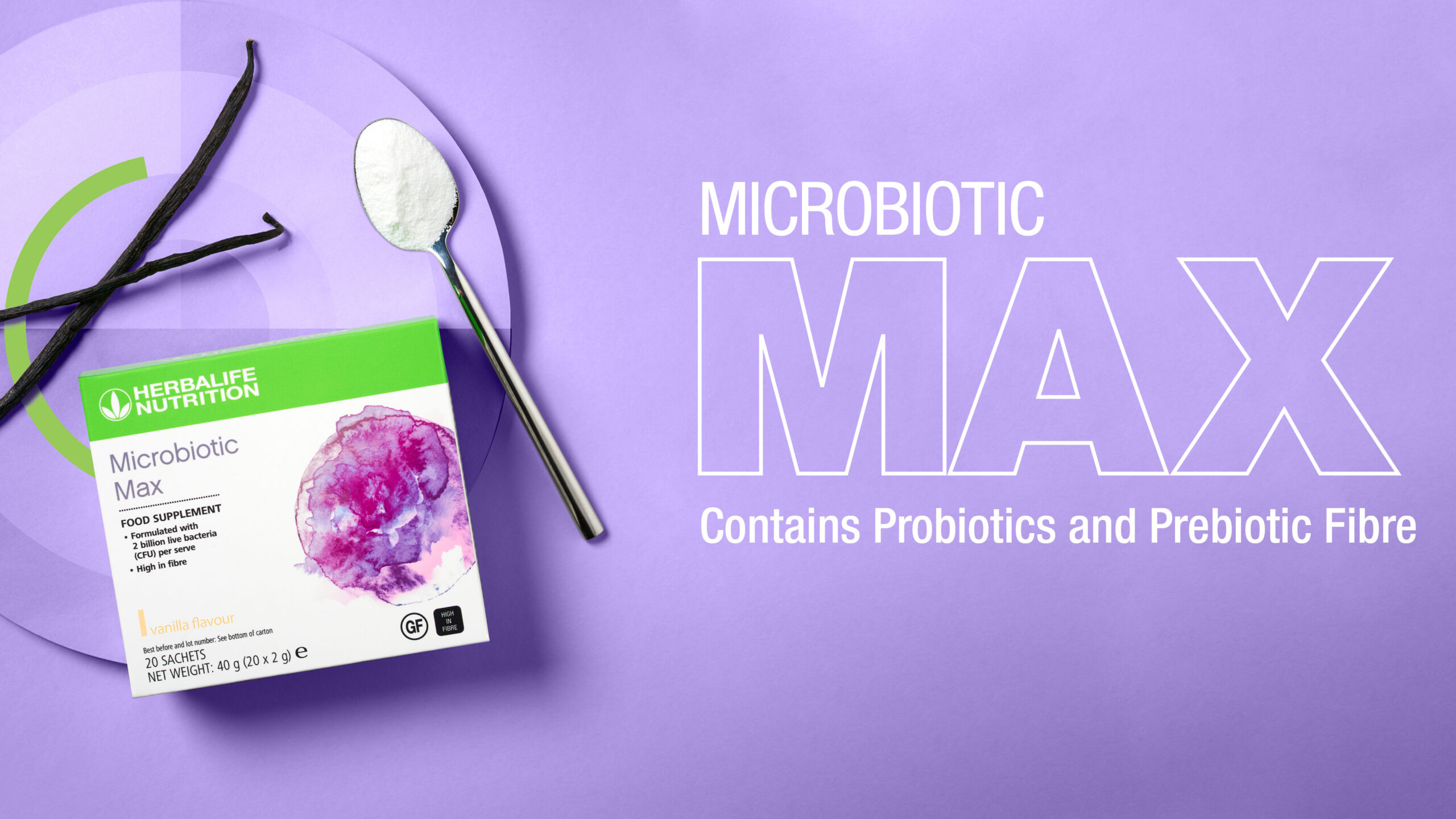
Microbiotic Max is formulated with a combination of live bacteria and fibre that work together — a pairing scientists call a synbiotic. Each sachet delivers 2 billion live bacteria and is high in fibre, with a subtle vanilla flavour.
This guide covers exactly what’s in it, what’s officially claimed versus what the underlying ingredient research says, and how to use it. If you’re new to the terms, we also answer some of the most common questions people search about prebiotics and probiotics generally.
Jump to a section
What’s In It
Ingredients, taken directly from the official product label:
Galactooligosaccharides powder (galactooligosaccharides (milk), lactose (milk), glucose (milk), galactose (milk)), maltodextrin, Lactobacillus helveticus R52, Bifidobacterium lactis HN019, flavouring, anti-caking agent (silicon dioxide).
Nutritional Information
Per the official product label:
| Component | Per 100ml made-up product* |
|---|---|
| Fibre | 2 g |
| Lactobacillus helveticus R52 | 1 billion CFU |
| Bifidobacterium lactis HN019 | 1 billion CFU |
* 1 sachet (2g of powder) dissolved in about 100ml water. CFU = Colony Forming Unit, a standard measure of live bacteria count.
What’s Officially Claimed
Herbalife’s official description for Microbiotic Max is deliberately narrow: it states the product is high in fibre, delivers 2 billion live bacteria per serving, is gluten-free, and doesn’t need refrigeration. It does not claim a specific health effect (like “supports digestion” or “boosts immunity”) for the finished product — this is consistent with EU/UK food law, under which no specific health claim for probiotic bacteria has been authorised. Any broader discussion of what these ingredients do is general ingredient science, not an approved claim for this product — which is exactly how we’ve presented it below.
Understanding the Ingredients: What the Research Says
Beyond the product’s own label, Herbalife publishes a separate “Behind the Science” resource on prebiotics and probiotics, citing dozens of peer-reviewed studies. It carries its own disclaimer: this content is educational, not evaluated by any regulatory body, and shouldn’t be treated as marketing material. With that distinction in mind, here’s what’s genuinely known about the two ingredient types in Microbiotic Max:
Prebiotic fibre (galactooligosaccharides)
Galactooligosaccharides (GOS) are a type of fibre the body can’t digest itself. They travel to the large intestine, where gut bacteria ferment them — feeding bifidobacteria in particular. In a published trial cited on Herbalife’s science resource, healthy adults who reported general symptoms of bloating, abdominal discomfort or flatulence took a GOS-based prebiotic daily; symptom relief was reported by a majority of participants within one to two weeks, based on self-reported questionnaires. This is general population research on the ingredient category, not a claim specific to Microbiotic Max’s formulation or dose.
Bifidobacterium lactis HN019
B. lactis HN019 is a specific, well-studied probiotic strain, originally isolated from a New Zealand yoghurt product. It’s been tested in numerous human trials over several decades and is known to survive passage through the digestive system. In a published dose-response study, healthy adults with gastrointestinal symptoms who took roughly 1–2 billion CFU of HN019 daily for 14 days showed measurable improvements in gut transit time — the higher of the two doses tested showed a larger effect.
Lactobacillus helveticus R52
R52 is included as the second live bacterial strain in the formula. Herbalife’s product label states what it is (a listed ingredient, dose disclosed above) without attaching a specific claim to it, so we don’t add one here either.
How to Use It
Add 1 sachet into half a glass of water (about 100ml), stir until dissolved and enjoy — on its own, or added to your favourite Formula 1 Healthy Meal shake (stir in after blending, not before). Use liquids below 25°C, since heat can affect the live bacteria. Consume once a day. Do not exceed the recommended daily dose. Use within a balanced and varied diet, as part of a healthy, active lifestyle. Store in a cool, dry place, below 25°C, out of reach of young children.
What to Combine It With
Microbiotic Max is designed to be taken alongside your normal routine — most simply, stirred into a Formula 1 shake after blending.
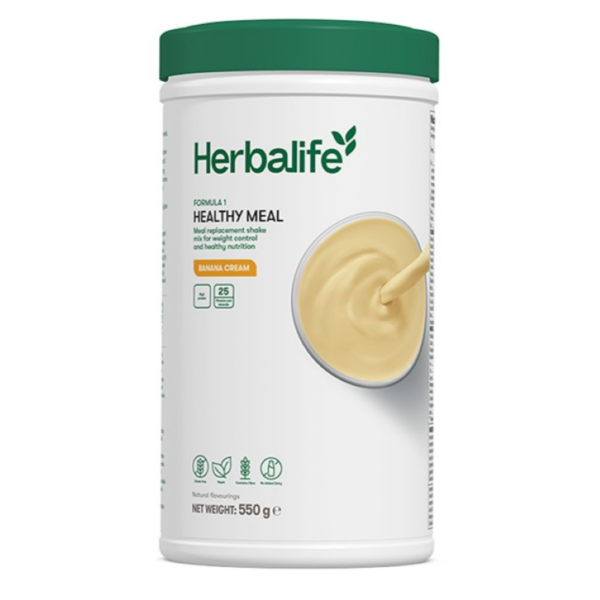
Formula 1 Healthy Meal
Blend your shake first, then stir in Microbiotic Max — don’t add it before blending or to hot liquid.
Read the GuideFrequently Asked Questions
What’s the difference between prebiotics and probiotics?
Probiotics are the live bacteria themselves. Prebiotics are fibres that feed those bacteria (and the bacteria already living in your gut). A product combining both, like Microbiotic Max, is called a synbiotic.
How many CFU should a probiotic supplement have?
There’s no single official minimum — published research on individual strains like B. lactis HN019 has used doses ranging from around 1 to 2 billion CFU per day. Microbiotic Max provides 2 billion CFU per sachet.
Does Microbiotic Max need to be refrigerated?
No — according to the label, it’s shelf-stable and doesn’t require refrigeration. Store it in a cool, dry place below 25°C.
Can I add it to a hot drink?
No. Use liquids below 25°C — heat can affect the live bacteria and reduce the product’s efficacy.
Does Microbiotic Max contain milk?
Yes. The galactooligosaccharides powder is derived from lactose, so the product contains milk. It may also contain soybeans.
Is Microbiotic Max gluten-free?
Yes, according to the official product description.
Sources & References
- Herbalife Microbiotic Max official product label and product description, Herbalife International Luxembourg S.à r.l. / Herbalife Europe Limited (UK)
- Herbalife UK — Behind the Science: Prebiotics and probiotics (educational resource, not a regulatory-evaluated claim)
- Waller PA, et al. Dose-response effect of Bifidobacterium lactis HN019 on whole gut transit time and functional gastrointestinal symptoms in adults. Scand J Gastroenterol. 2011;46(9):1057-64
- Vulevic J, et al. Effect of a prebiotic galactooligosaccharide mixture on gastrointestinal symptoms in adults selected from a general population who suffer with bloating, abdominal pain, or flatulence. Neurogastroenterol Motil. 2018;30(11):e13440
Dogus Dilan — Herbalife Independent Member / Wellness Coach
Writes every guide on this site from official Herbalife product labels and published data rather than marketing copy. As a Herbalife Independent Member, the products discussed here are sold through this shop.