
Herbalife Tea: Caffeine, Calories & What’s In It (UK)
Herbalife Tea — sold as Instant Herbal Beverage with Tea Extracts — is a powdered drink made from green tea and Orange Pekoe black tea extracts. One 1.7g serving provides 87.5mg of caffeine and 6 calories. It comes in five flavours and two sizes: 51g for about 30 servings and 102g for about 60. The caffeine content is what carries its authorised claims, and at 87.5mg a serving it sits between a cup of tea and a cup of instant coffee.
What Is Actually in It
The ingredient list for the Original flavour, as printed on the label, is: maltodextrin (bulking agent), green tea leaf extract (Camellia sinensis L.) 17.7%, Orange Pekoe black tea leaf extract (Camellia sinensis L.) 4.7%, caffeine powder, hibiscus flower powder, cardamom seed extract and natural flavouring.
Two things are worth noticing. The first is that the tea extracts are declared with percentages, which is unusual and useful — 17.7% green tea and 4.7% black tea tells you the product is predominantly a green tea drink. The second is that caffeine powder is listed as a separate ingredient, so the caffeine is not solely what the tea leaves happen to carry; it is added to a specified level.
| Per 1.7g serving | Amount |
|---|---|
| Caffeine | 87.5 mg |
| Energy | 6 kcal |
| Green tea leaf extract | 17.7% of the formula |
| Orange Pekoe black tea leaf extract | 4.7% of the formula |
A 51g tub holds about 30 servings and a 102g tub about 60, at 1.7g per serving.
The Caffeine: How It Compares and What It Is Allowed to Claim
Caffeine is the ingredient here with authorised claims behind it. Two claims apply, and both require a minimum of 75mg of caffeine per serving. At 87.5mg, this product clears that threshold:
Caffeine helps to increase alertness.
Caffeine helps to improve concentration.
These are the wordings on the GB nutrition and health claims register, the list of claims permitted in Great Britain. No other claim on this page is an authorised one.
For context, the NHS gives these caffeine figures for everyday drinks:
| Drink | Caffeine |
|---|---|
| Instant coffee, one cup | 100 mg |
| Herbalife Tea, one 1.7g serving | 87.5 mg |
| Black or green tea, one cup | 75 mg |
| Energy drink, 250ml can | 80 mg |
| Cola, one can | 40 mg |
NHS figures. Filter coffee and coffee-shop drinks can contain considerably more than instant coffee.
So a serving is a little less than a cup of instant coffee and a little more than a cup of ordinary tea. That matters for how you fit it into a day, which is the next section.
Does Herbalife Tea Burn Fat?
This is the question people ask most often about it, so it deserves a direct answer: no, and no product does. There is no authorised claim in Great Britain allowing any food or supplement to be described as burning fat, and there is no such thing as targeting fat in a particular area of the body — losing fat from the stomach specifically is not something any drink can do.
What the product is actually permitted to claim is the two caffeine claims above: alertness and concentration. Those are real, but they are not weight-loss claims.
Where it can genuinely fit into weight management is simpler and less exciting. At 6 calories a serving it is a way to have something flavoured during the day without adding meaningful energy, which is useful if you are replacing higher-calorie drinks. Any weight change comes from overall energy intake, not from the tea. If weight management is the goal, the daily programme guide and the Formula 1 guide cover the part of the range that carries the authorised meal replacement claim.
How Much Is Too Much
In pregnancy, the NHS limit is 200mg of caffeine a day from all sources combined. Two servings of this tea come to 175mg, which leaves almost nothing for any other caffeinated drink that day. If you are pregnant or breastfeeding, speak to your midwife or GP before making it a daily habit.
Caffeine sensitivity varies widely. If you are sensitive to it, take medication that interacts with caffeine, or have a heart condition, high blood pressure or an anxiety disorder, check with your GP first.
Timing is worth thinking about as well. Caffeine taken late in the day can interfere with sleep even in people who do not feel wired by it, so an afternoon cut-off is sensible.
The Five Flavours
All five share the same tea extract base; what changes is the flavouring. Original is the plain version, and the fruit flavours are the ones most people prefer served cold.
| Flavour | Character | Sizes |
|---|---|---|
| Original | Plain tea, no added fruit flavour | 51g and 102g |
| Peach | The most popular of the fruit flavours | 51g |
| Lemon | Sharper, works well iced | 51g |
| Raspberry | Softer and sweeter in character | 51g |
| Mango Dragon Fruit | The most tropical of the range | 102g |
Flavour descriptions reflect the range as sold; the nutrition figures above are for the Original flavour label.
How to Use It
Hot. Add half a teaspoon (1.7g) to a mug, top up with hot water and stir until dissolved. It dissolves instantly, which is the point of the format — there is nothing to brew or strain.
Iced. Dissolve the powder in a small amount of warm water first, then top up with cold water and ice. Added straight to cold water it tends to clump.
How often. One to three servings a day is the usual pattern, keeping the total caffeine figure above in mind. A serving is 6 calories, so it does not need counting in any meaningful way.
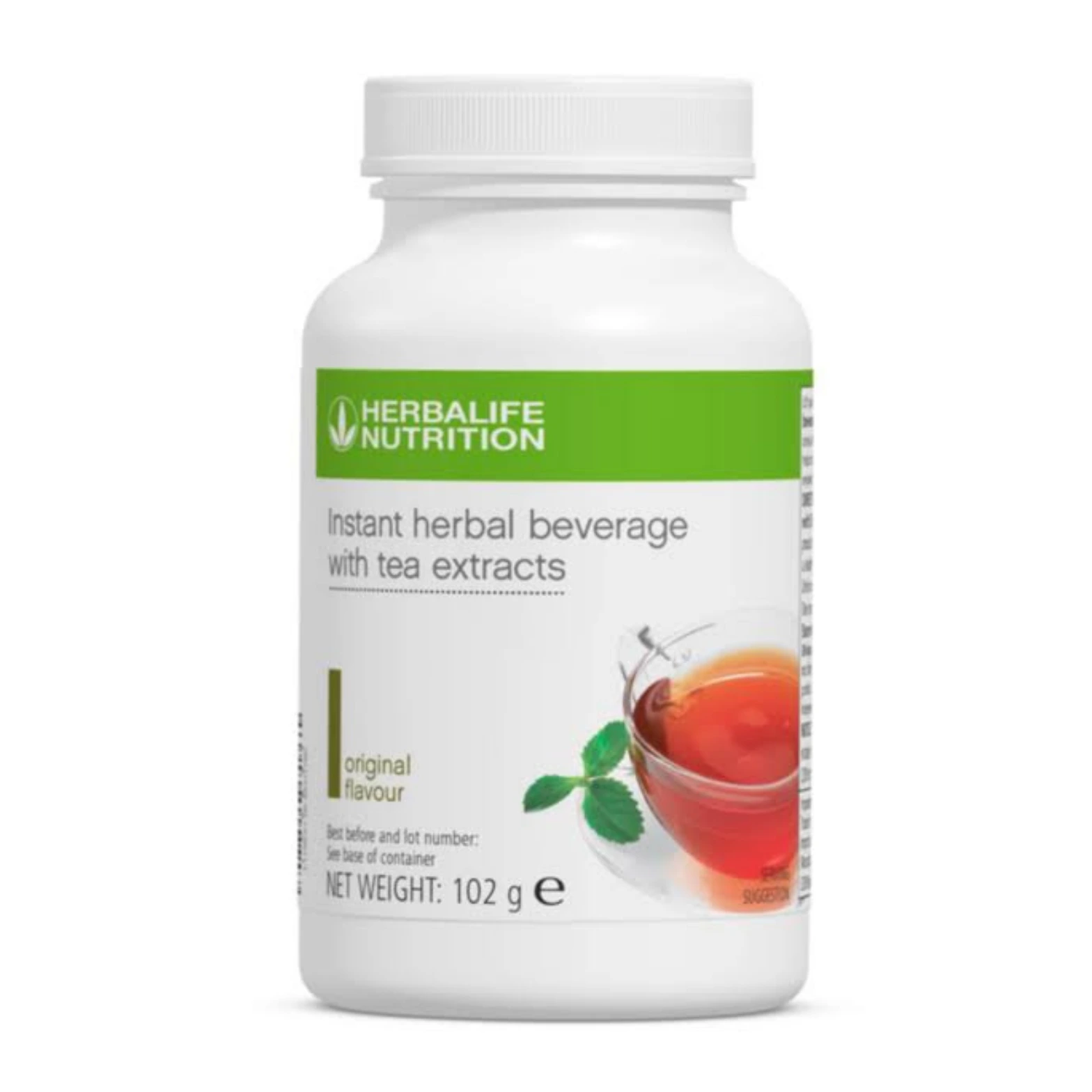
Herbalife Instant Herbal Beverage with Tea Extracts, 102 g
Original flavour, about 60 servings per tub. 87.5mg caffeine and 6 calories per 1.7g serving, from green tea and Orange Pekoe black tea extracts. Shipped from the official Herbalife UK warehouse with a 30-day money-back guarantee.
View ProductFrequently Asked Questions
How much caffeine is in Herbalife Tea?
Does Herbalife Tea burn belly fat?
Is Herbalife Tea good for weight loss?
How many servings are in a tub?
Can I drink Herbalife Tea while pregnant?
Can I drink Herbalife Tea every day?
Should I drink it hot or cold?
What is the difference between the 51g and 102g sizes?
Sources & References
- Herbalife Nutrition — official UK product label, Instant Herbal Beverage with Tea Extracts (ingredient list, caffeine and energy figures, serving size).
- NHS — Foods to avoid in pregnancy: the 200mg daily caffeine limit and the caffeine figures for coffee, tea, cola and energy drinks.
- Department of Health and Social Care — Great Britain nutrition and health claims (NHC) register, including the caffeine alertness and concentration claims and their 75mg per serving condition.
Related Reading
This is a food, not a medicine. It is not recommended for children. If you are pregnant or breastfeeding, sensitive to caffeine, taking medication, or have a medical condition, consult a healthcare professional before use.
Dogus Dilan — Herbalife Independent Member / Wellness Coach
Writes every guide on this site from official Herbalife product labels and published data rather than marketing copy. As a Herbalife Independent Member, the products discussed here are sold through this shop.