
Herbalifeline Max Omega-3: EPA, DHA and the Real Claims (UK)
By Dogus Dilan, Herbalife Independent Member / Wellness Coach · Last updated 4 October 2026
Herbalifeline Max provides 375mg EPA and 250mg DHA per capsule — 625mg combined, which is two and a half times the 250mg daily intake the authorised heart-function claim is based on. Omega-3 claims are dose-specific: 250mg EPA+DHA for normal heart function, 250mg DHA for brain function and vision, 2g for blood triglycerides, 3g for blood pressure. If you take blood-thinning medication or have surgery scheduled, speak to your GP before starting or increasing fish oil. The EU caps combined supplemental EPA and DHA at 5g a day.
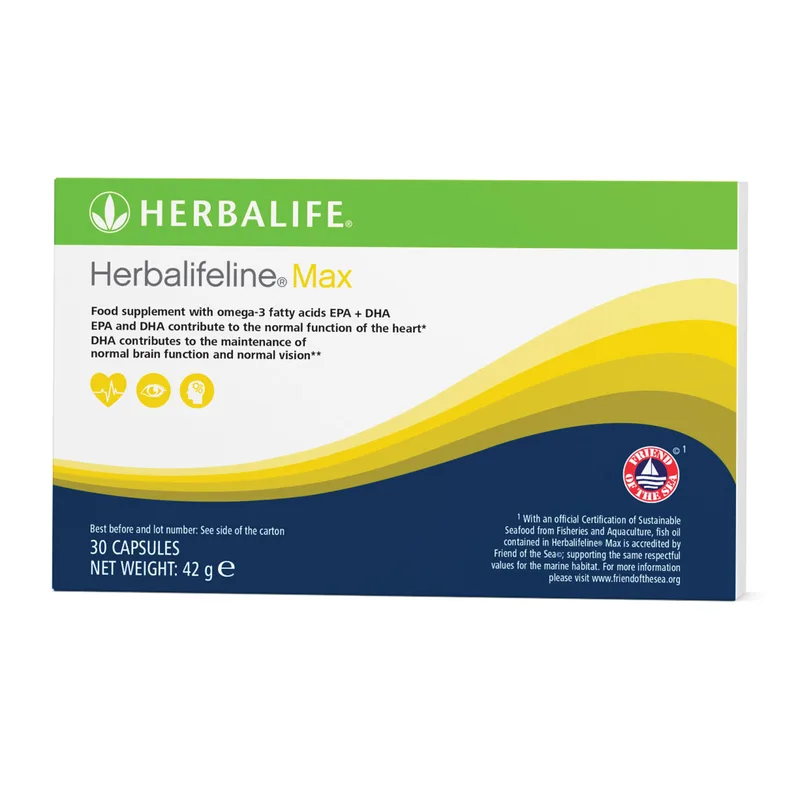
Herbalifeline Max
375mg EPA + 250mg DHA per capsule. Friend of the Sea-accredited sustainable fish oil, with thyme and peppermint essential oils to reduce aftertaste. Vegetarian capsule shell.
View ProductWhat Is Actually in Herbalifeline Max
Most fish oil supplements are sold on total oil weight, which tells you very little — what matters is how much EPA and DHA that oil actually contains. Herbalifeline Max states both figures directly on the label: 375mg EPA and 250mg DHA per capsule.
The DHA figure is the one worth noticing. The authorised brain and vision claim requires 250mg of DHA specifically, not 250mg of combined omega-3 — a distinction many products blur. One capsule meets that threshold on its own.
The oil is Friend of the Sea-accredited, which is a sustainability certification covering the fishery rather than a nutritional measure. Thyme and peppermint essential oils are included to reduce the aftertaste that puts people off fish oil. The capsule shell is vegetarian, though the oil inside is fish-derived, so the product itself is not suitable for vegetarians or vegans.
ALA, EPA and DHA Aren’t Interchangeable
ALA (alpha-linolenic acid) comes from plant sources like flaxseed and walnuts, but the body converts only a small fraction of it into EPA and DHA — the two forms with the most established research behind them. EPA and DHA are found pre-formed in oily fish, which is why the NHS recommends at least two portions of fish a week, including one oily fish.
DHA is a major structural component of the brain and retina; EPA is more associated with cardiovascular research. Both matter, which is why most quality supplements provide a blend of the two rather than one alone.
The Real, Dose-Specific Authorised Claims
This is worth being precise about, because the benefit genuinely depends on how much you take — these aren’t blanket claims that apply at any dose:
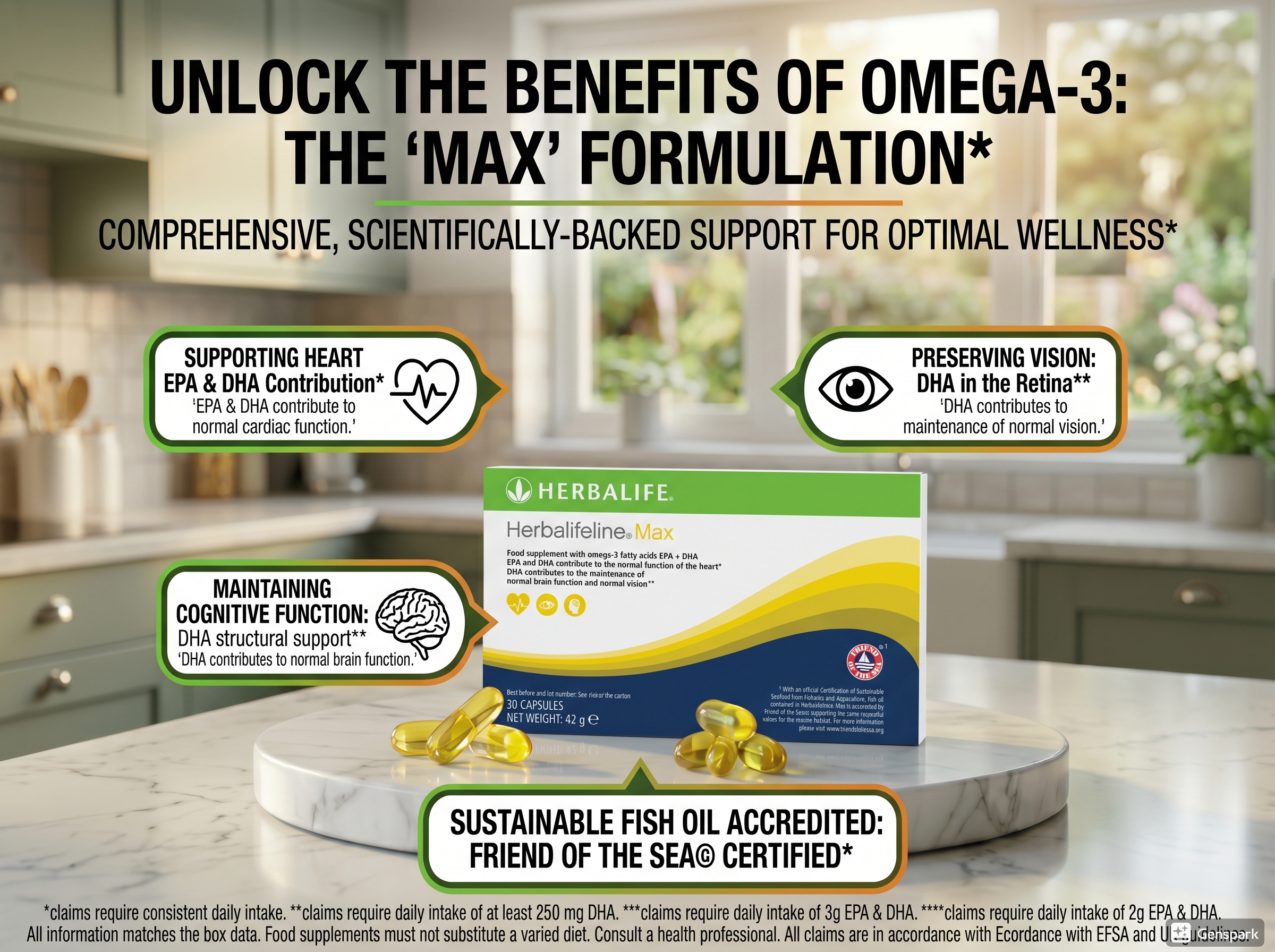
250mg EPA+DHA daily
Contributes to normal heart function. One Herbalifeline Max capsule provides 625mg.
250mg DHA daily
Contributes to the maintenance of normal brain function and normal vision. One capsule provides exactly 250mg DHA.
2g EPA+DHA daily
Contributes to the maintenance of normal blood triglyceride levels.
3g EPA+DHA daily
Contributes to the maintenance of normal blood pressure.
Note this doesn’t include a cholesterol claim — omega-3’s authorised claims are for triglycerides, blood pressure and heart function specifically, a genuinely different thing. In Great Britain these claims are carried on the GB nutrition and health claims register, which is the only list of claims permitted here.
If You Take Blood-Thinning Medication, Read This
Omega-3 fatty acids have a mild effect on platelet function and blood clotting. The evidence on real-world bleeding risk is genuinely mixed: some studies, including a large retrospective analysis of warfarin patients, found no significant increase in bleeding events, while case reports and reviews caution that doses above 3g a day combined with anticoagulants (like warfarin) or antiplatelet drugs (like aspirin) may increase bleeding risk, particularly around surgery or injury.
The practical takeaway: if you’re on blood-thinning medication, have a bleeding disorder, or have surgery scheduled, talk to your GP or pharmacist before starting or increasing a fish oil supplement — this is standard, sensible precaution rather than a reason to avoid omega-3 altogether. The EU also sets a general cap of 5g of combined EPA and DHA per day from supplements.
Richest Food Sources
Figures are approximate and vary by preparation and specific fish source.
The Real Way to Know If You Need More
It’s worth being honest here: there isn’t a reliable checklist of symptoms (dry skin, brittle nails, poor sleep) that specifically points to low omega-3 — those signs have dozens of possible causes and aren’t a diagnostic method. The genuinely useful question is simpler: are you eating two portions of fish a week, including one oily fish, per NHS guidance? If not consistently, a supplement is a reasonable way to help close that gap — not because of a specific symptom, but because of the dietary pattern itself.
Pregnancy & Breastfeeding
DHA is a structural component of the developing brain and retina, and European guidance generally recommends an additional intake of DHA on top of the general 250mg EPA+DHA recommendation during pregnancy and breastfeeding. Avoid supplements that also contain Vitamin A (such as cod liver oil) during pregnancy, since high Vitamin A intake carries its own risks. Always speak to your GP or midwife before starting any new supplement during pregnancy.
Frequently Asked Questions
How much EPA and DHA does Herbalifeline Max contain?
How much EPA and DHA should I take daily?
Can I take fish oil with blood-thinning medication?
Is Herbalifeline Max suitable for vegetarians?
Does omega-3 lower cholesterol?
Does fish oil prevent Alzheimer’s disease?
How can I prevent fishy aftertaste?
Sources & References
- NHS — “Fish and Shellfish Nutrition.”
- Department of Health and Social Care — Great Britain nutrition and health claims (NHC) register, the list of claims authorised for use in Great Britain.
- EFSA — Scientific opinions underlying the authorised EPA and DHA claims (originally Regulation (EU) No 432/2012).
- Kumar, S. et al. (2016). “The Use of Fish Oil with Warfarin Does Not Significantly Affect either the International Normalised Ratio or Incidence of Adverse Events.” Nutrients. Retrospective analysis, 573 patients.
- Friend of the Sea — sustainable fisheries and aquaculture certification.
- Herbalife Nutrition — official UK product label, Herbalifeline Max.
Related Reading
This is a food supplement, not a medicine. If you take blood-thinning medication, have a bleeding disorder, have surgery scheduled, are pregnant or breastfeeding, or have a medical condition, consult a healthcare professional before use.
Dogus Dilan — Herbalife Independent Member / Wellness Coach
Writes every guide on this site from official Herbalife product labels and published data rather than marketing copy. As a Herbalife Independent Member, the products discussed here are sold through this shop.