
Protein Shakes for Weight Gain: Which Herbalife Product to Choose
Gaining weight comes down to eating more calories than you burn, and for most people the obstacle is appetite rather than willpower. A Formula 1 shake made with whole milk is roughly 255 kcal and 18 g of protein in a glass that takes two minutes to drink, which is why people use it as an extra meal rather than as a meal replacement. This guide compares the Herbalife protein products that get combined for that purpose — Formula 1, Protein Drink Mix, Formula 3 and Rebuild Strength — with the protein, calories and cost per serving of each, so you can see which one fits where. Dogus Dilan is a Herbalife Independent Member.
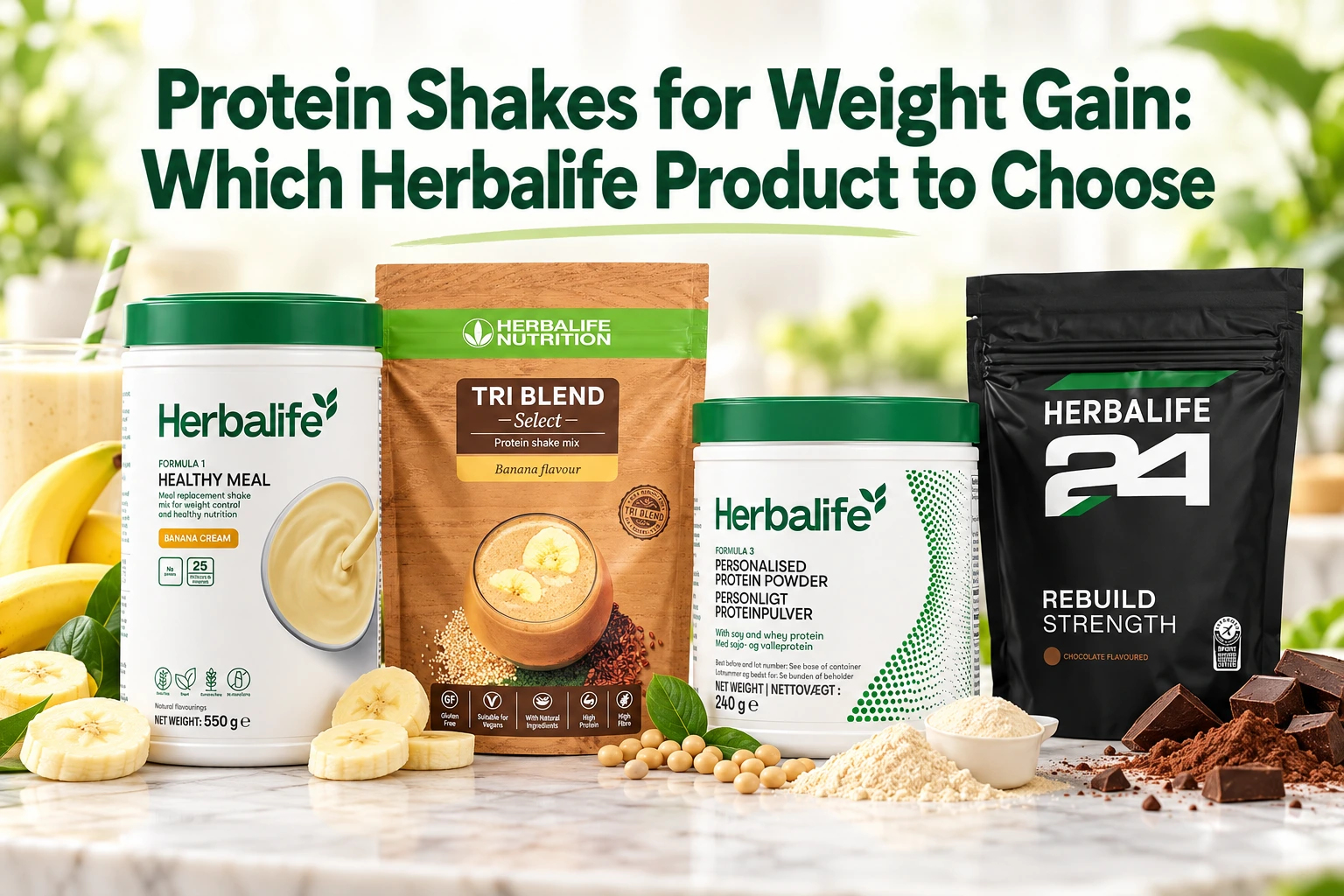
If you have ever been told to “just eat more” and found it harder than it sounds, you already know the real problem: three big meals a day is a lot of chewing, and appetite does not stretch on command.
Liquid calories solve that, because a shake goes down when a fourth plate of food will not. Protein matters too — it decides whether the weight you put on is muscle or fat.
What follows is the honest version: which products do what, what each one costs per serving, and where Herbalife has no answer at all.
What is on this page
- Does Herbalife make a mass gainer?
- Why protein changes what you gain
- Comparing the four protein products
- This is not the usual Formula 1 protocol
- Making a shake more calorie-dense
- If you are a woman looking to gain weight
- What the NHS recommends
- The products most people combine
- When to speak to your GP first
- Frequently asked questions
Does Herbalife make a mass gainer?
No. There is no product in the Herbalife range sold as a mass gainer or weight gainer, and nothing in the line-up is formulated the way a dedicated bulking powder is — those typically carry 500 to 1,250 kcal per serving, mostly from added maltodextrin.
What Herbalife has instead is a set of protein products designed around meals. People who want to gain weight use them by adding servings to what they already eat, rather than by buying one high-calorie powder.
That is a genuine difference, and worth knowing before you buy. If what you want is the biggest possible calorie hit in one scoop, a dedicated mass gainer from a sports nutrition brand will do that more efficiently. If what you want is extra protein and calories in a form you will actually keep taking, the approach below works.
Why protein changes what you gain
Eating a surplus adds weight. How much of that weight is lean tissue rather than fat depends heavily on protein intake.
The clearest evidence comes from a controlled overfeeding trial published in JAMA in 2012. Twenty-five adults were overfed by the same number of calories for eight weeks, split into three groups on low, normal and high protein diets. Everyone gained a similar amount of total weight. What differed was the composition:
| Protein intake | Change in lean mass |
|---|---|
| Low protein (5% of energy) | −0.70 kg |
| Normal protein (15% of energy) | +2.87 kg |
| High protein (25% of energy) | +3.18 kg |
The low-protein group gained weight while losing lean mass. That is the practical argument for putting protein at the centre of a weight-gain plan rather than simply adding calories wherever they are easiest to find.
Comparing the four protein products
These are the four Herbalife products that come up most often for this. Figures are per serving, taken from the UK product labels, with the cost per serving worked out from the current prices in this shop.
| Product | Protein | Calories | Cost per serving | Where it fits |
|---|---|---|---|---|
| Formula 1 | 18 g | 227 kcal | £1.28 | An extra meal, not a replacement |
| Protein Drink Mix | 15 g | 108 kcal | £1.52 | On its own, or stirred into Formula 1 |
| Formula 3 | 5 g | 23 kcal | £0.52 | A top-up added to anything |
| Herbalife24 Rebuild Strength | 25 g | — | — | After strength training |
Three things stand out from that table.
Formula 3 is the cheapest protein in the range by a distance. At 52p a serving it is less than half the cost of anything else here, because a serving is only 6 g of powder. It adds almost no calories, so it is a protein top-up rather than a meal — but if you are stirring protein into porridge, soup or a shake every day, this is the one that costs the least to do it with.
Protein Drink Mix is lower in calories than people expect. At 108 kcal it is a protein source, not a calorie source. Used on its own it will not move the needle on weight gain; used as an addition to Formula 1 it takes a shake from 18 g of protein to over 30 g.
Rebuild Strength is the most protein per serving, and the most expensive. It is a post-training product with 25 g of whey protein. If you are not strength training, the extra cost buys you nothing the others do not already cover.
This is not the usual Formula 1 protocol
Worth being clear about. Formula 1 is sold as a meal replacement, and its authorised use on the label is for weight control: you replace a meal with it, which lowers the calories in your day. Using it to gain weight means doing the opposite — adding it alongside your normal meals as a fourth or fifth eating occasion, so your total intake goes up rather than down.
The product is the same. The way you use it is different from the one described on the pack, and it is worth understanding that before you start.
In practice that usually means keeping your three normal meals as they are and adding one or two shakes between them — mid-morning, mid-afternoon or before bed. The point is that the shake sits on top of what you already eat, never in place of it.
Making a shake more calorie-dense
The base shake is 227 kcal. Small changes to how you make it move that figure a long way without making the glass any harder to finish.
| Two scoops of Formula 1 made with | Calories | Protein |
|---|---|---|
| 250 ml semi-skimmed milk | 227 kcal | 18 g |
| 250 ml whole milk | ~255 kcal | ~18 g |
| Whole milk and a medium banana | ~360 kcal | ~19 g |
| Whole milk and a scoop of Protein Drink Mix | ~470 kcal | ~34 g |
That last line is the one that matters. A single shake made this way covers most of the 300–500 kcal daily surplus the NHS suggests for gaining weight, and delivers roughly a third of a day’s protein for an average adult while doing it.
Nut butter, oats, full-fat yoghurt and dried fruit all work the same way. Anything calorie-dense that blends is fair game.
If you are a woman looking to gain weight
This question comes up often enough to answer directly, and the honest answer is that there is no women’s version of any of these products, and no need for one. The arithmetic is identical: a surplus of 300–500 kcal a day, with enough protein that what you gain is not purely fat.
What does differ is the starting point. A smaller body burns fewer calories at rest, so the same 400 kcal shake represents a larger share of your daily intake than it would for someone bigger — which is good news, because it means fewer additions are needed to create the surplus. One Formula 1 shake made with whole milk and a banana, on top of three normal meals, is often enough on its own.
The second difference is practical rather than physiological. Most weight-gain advice online is written for men who lift, and assumes an appetite that can absorb 3,000 kcal. If that framing has put you off, the useful part to take from it is only this: protein and consistency. The rest is noise.
If appetite itself is the barrier, liquid calories between meals tend to work better than larger meals, because they do not compete with the next one.
What the NHS recommends
The NHS guidance for adults who are underweight is straightforward and worth reading alongside any product-based approach:
- Aim for a surplus of roughly 300–500 kcal a day for steady gain
- Eat more often rather than making each meal larger — five or six smaller occasions beats three big ones
- Choose nourishing drinks between meals rather than with them, so they do not blunt your appetite
- Keep protein, fruit and vegetables in the picture; gaining weight on biscuits is still gaining weight badly
Shakes fit the second and third points almost exactly, which is the real reason they work for this.
The products most people combine
Bought together, Formula 1, Protein Drink Mix and Formula 3 cover the base shake, the protein boost and the cheap daily top-up. At current prices that combination comes to £79.70.
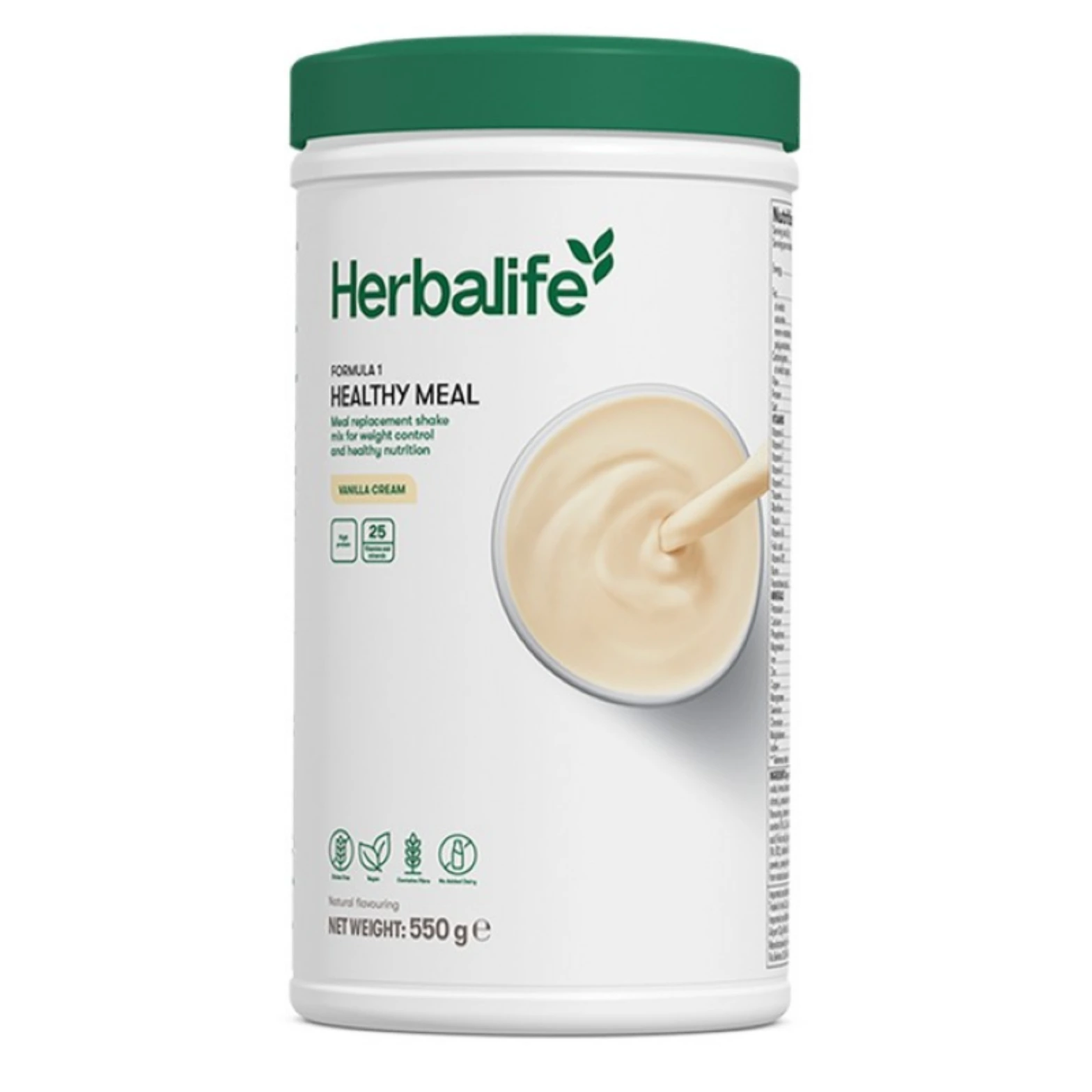
Formula 1 Vanilla Cream 550 g
£26.90
21 servings at £1.28. The base shake — 18 g protein and 227 kcal with semi-skimmed milk.
View Product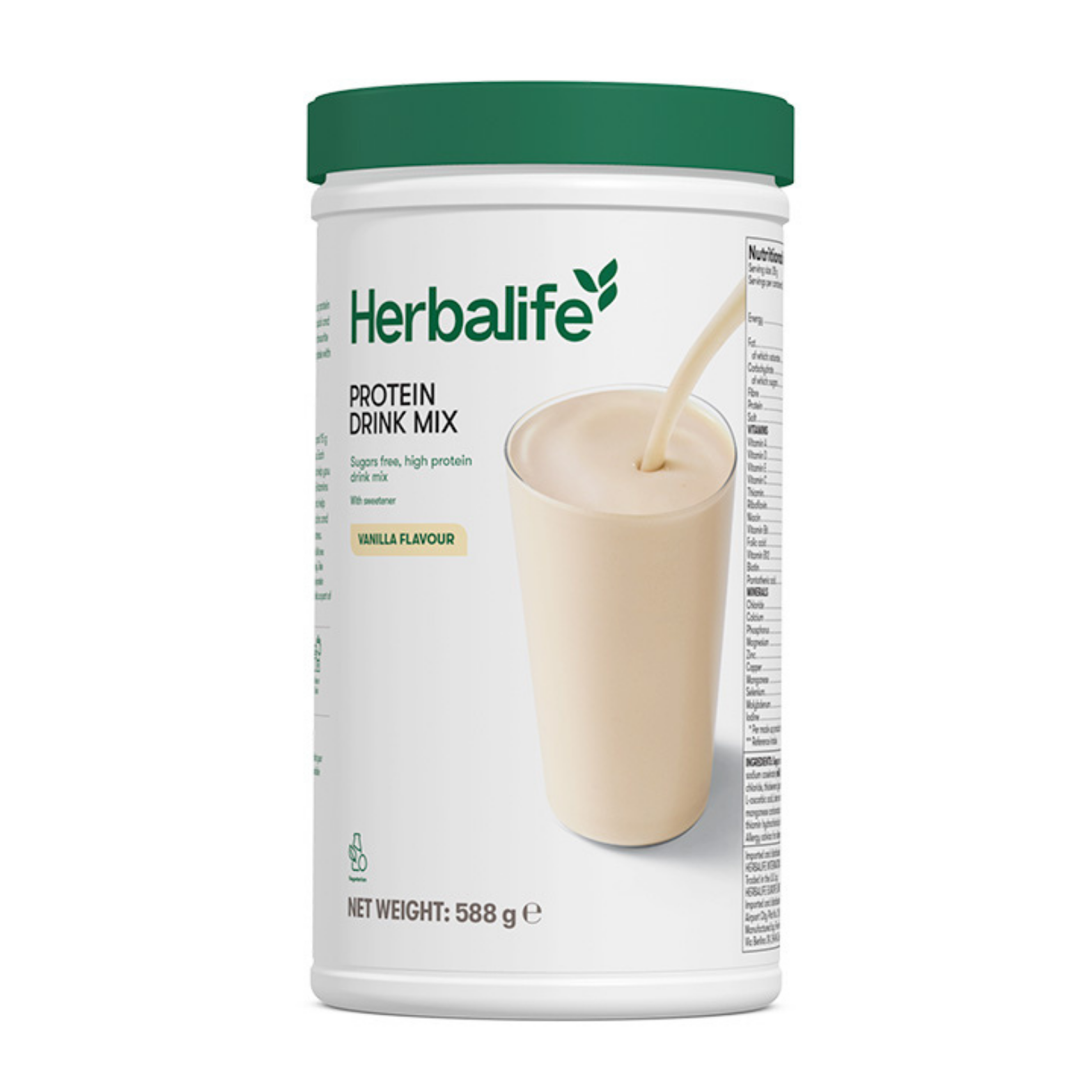
Protein Drink Mix 588 g
£31.90
21 servings at £1.52. Adds 15 g protein to a shake, or stands alone at 108 kcal.
View Product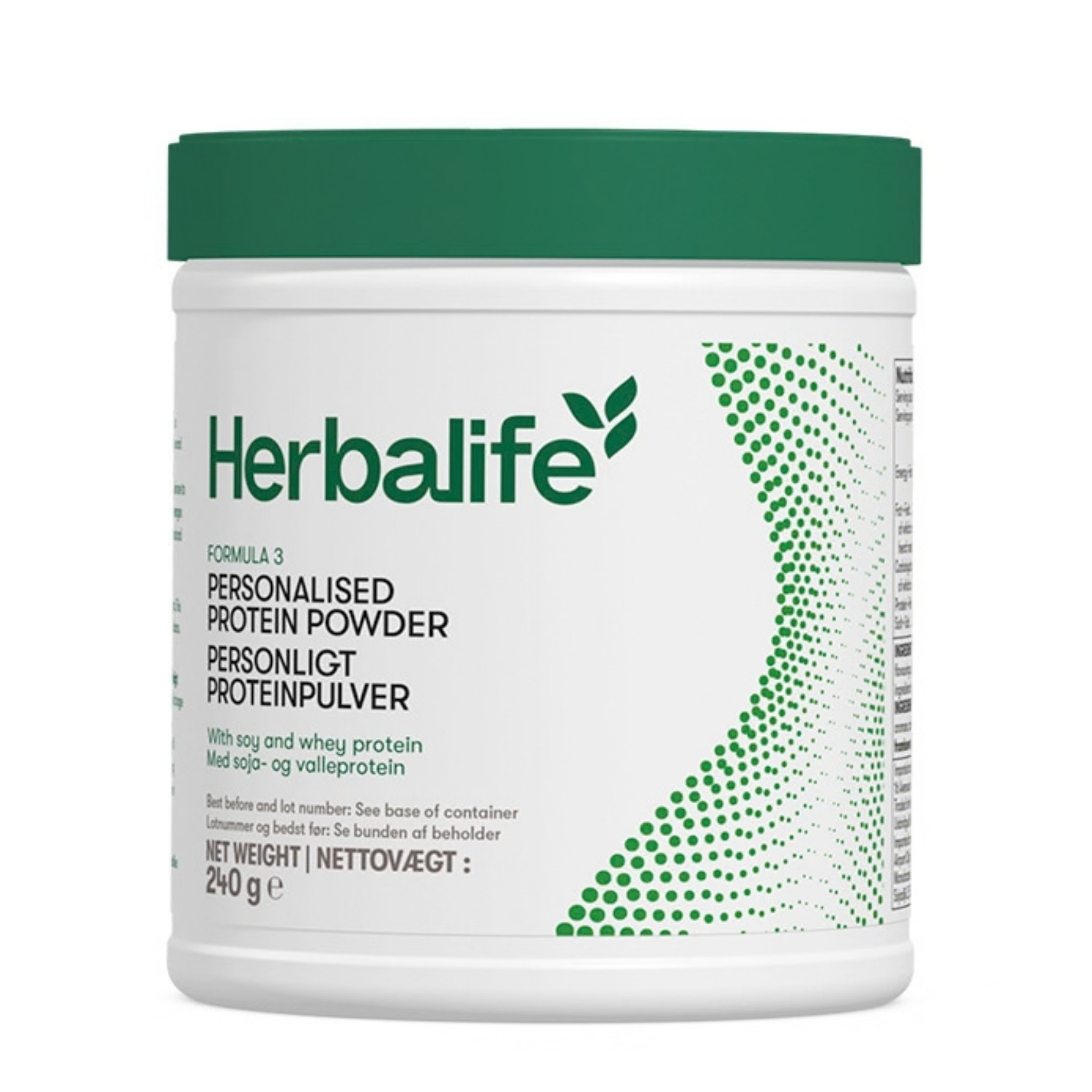
Formula 3 Protein Powder 240 g
£20.90
40 servings at 52p — the cheapest protein here. 5 g protein in 6 g of powder.
View Product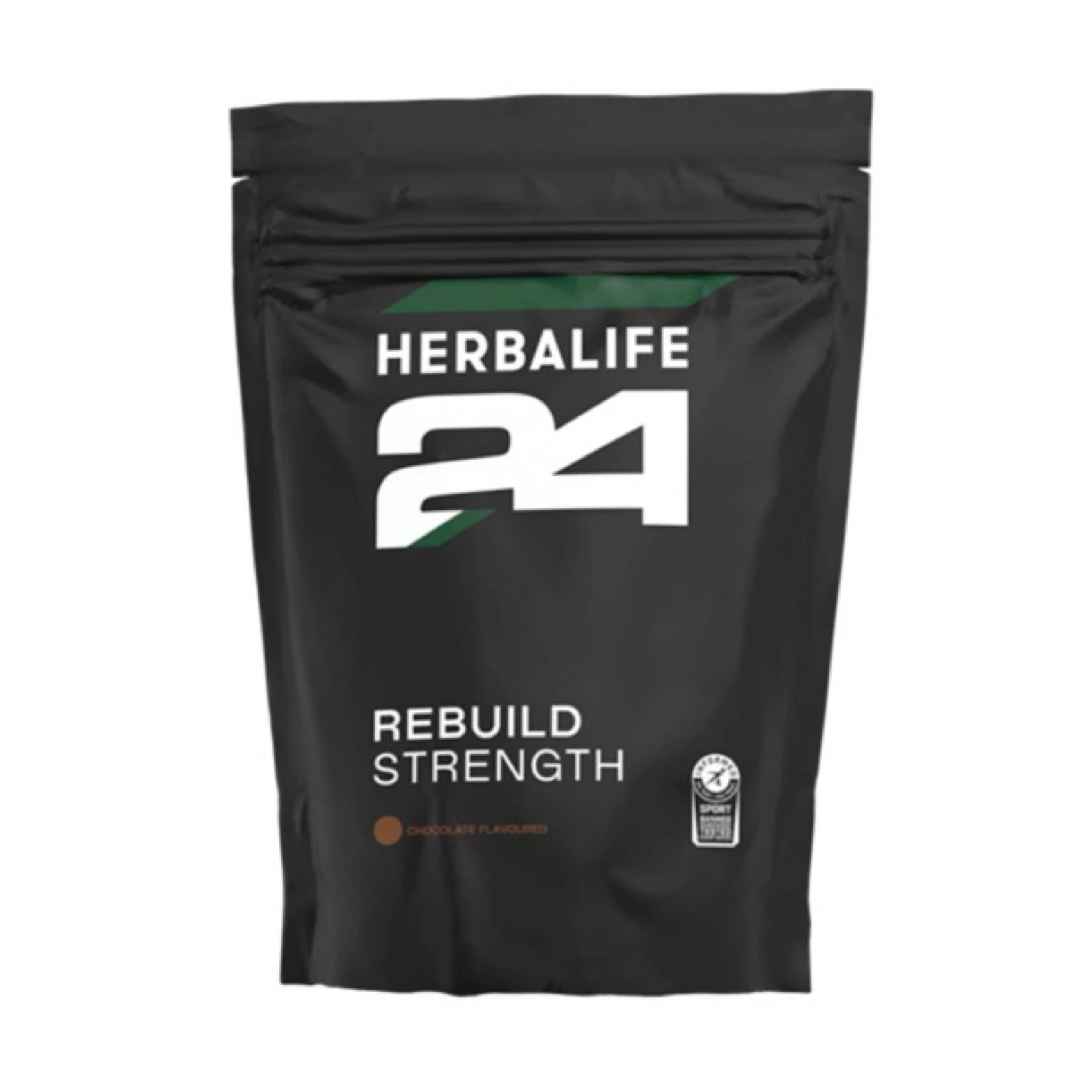
Herbalife24 Rebuild Strength 1000 g
£47.90
25 g whey protein per serving. Only worth adding if you are strength training.
View ProductFor snacking occasions rather than shakes, the Formula 1 Express bars and the Herbalife24 Achieve bars do the same job in a form you can carry. For a plant-based option, Tri Blend Select is the one to look at — note that it declares oat, so it is not gluten-free.
When to speak to your GP first
If you have lost weight without meaning to, see a GP before buying anything. Unintentional weight loss has causes worth ruling out, and no shake addresses them.
The same applies if you have been underweight for a long time, are recovering from illness, or are managing a condition that affects appetite or absorption. In those cases the right starting point is a conversation with a clinician, who may well still suggest nourishing drinks — but in the context of your situation rather than in place of looking at it.
Frequently asked questions
What is the best protein shake for putting on weight?
For most people it is whichever one you will drink consistently, made with whole milk rather than water. Within this range, Formula 1 with a scoop of Protein Drink Mix gives the best combination of calories and protein in one glass — around 470 kcal and 34 g of protein. Formula 3 is the cheapest way to add protein to food you are already eating.
Does Herbalife do a mass gainer or weight gainer?
No. There is no dedicated gainer in the range. People who use Herbalife products to gain weight do it by adding extra servings of Formula 1 and a protein product on top of their normal meals, rather than by buying a single high-calorie powder.
How many shakes a day should I have to gain weight?
Usually one or two, in addition to your normal meals rather than instead of them. Two shakes made with whole milk is roughly 510 kcal, which sits at the top of the 300–500 kcal daily surplus the NHS suggests. Start with one and add the second if the scales are not moving after a fortnight.
Is Formula 1 not a weight loss product?
It is sold as a meal replacement for weight control, and that is the use described on the label. Gaining weight with it means using it the other way round — as an additional meal rather than a replacement — so your total intake rises. The product does not change; the way you fit it into the day does.
Can women use the same products?
Yes. There is no women’s version and no need for one. The difference is in the numbers rather than the product: a smaller body needs a smaller surplus, so one shake a day on top of normal meals is often enough.
How long before I see a change?
At a 300–500 kcal daily surplus, expect something in the region of 0.25–0.5 kg a week. That is slow by design — faster gain tends to be mostly fat. Weigh yourself weekly rather than daily, at the same time of day, and judge the trend over a month.
Which is better value, Protein Drink Mix or Formula 3?
They do different jobs. Formula 3 costs 52p a serving against £1.52 for Protein Drink Mix, but a serving is only 5 g of protein against 15 g. Per gram of protein they are close; the real difference is that Formula 3 is a top-up you stir into something else, while Protein Drink Mix can stand on its own as a drink.
Sources & references
- Bray GA, Smith SR, de Jonge L, et al. Effect of dietary protein content on weight gain, energy expenditure, and body composition during overeating: a randomized controlled trial. JAMA. 2012;307(1):47–55.
- NHS — Advice for underweight adults
- Herbalife UK product labels for Formula 1, Protein Drink Mix, Formula 3 and Herbalife24 Rebuild Strength (nutrition values and servings per container)
Related reading
- Formula 1 and Protein Drink Mix compared — what each one is actually for
- Herbalife prices UK — full price list and cost per serving across the range
- Vegan, vegetarian and gluten-free list — which products suit which diet
Prices checked on 17 October 2026. Nutrition figures are taken from the official Herbalife UK product labels; values for milk, fruit and other additions are approximate and vary by brand. This page is general information about products and is not dietary or medical advice. Dogus Dilan is a Herbalife Independent Member and is not Herbalife Europe Limited.
Dogus Dilan — Herbalife Independent Member / Wellness Coach
Writes every guide on this site from official Herbalife product labels and published data rather than marketing copy. As a Herbalife Independent Member, the products discussed here are sold through this shop.