Creatine for Women: What the Research Actually Says (UK Guide)
By Dogus Dilan, Herbalife Independent Wellness Coach · Last updated 14 August 2026 · 9 min read
For most of creatine’s research history, studies focused almost entirely on male athletes. That’s changed fast: a 2025 review in the Journal of the International Society of Sports Nutrition specifically mapped creatine’s role across women’s life stages, from menstruation through pregnancy to menopause — and UK search interest has followed the research.
This guide covers what the actual evidence shows (not the social media version), realistic dosing, who should be cautious, and where Herbalife24 Creatine+ fits in.
Jump to a section
Why Creatine and Women’s Health Is Trending
Creatine is a compound the body produces naturally in the liver, kidneys and pancreas, and stores mostly in skeletal muscle, with small amounts in the brain and heart. Historically, creatine research and marketing skewed heavily towards male athletes. That’s shifted: a growing body of female-specific research, combined with mainstream and social media coverage, has driven a genuine rise in interest — Bupa’s UK data shows this wasn’t a brief spike but a sustained year-on-year increase, particularly around the terms “creatine for women” and “creatine and menopause.”
Part of the reason: women naturally have lower baseline muscle creatine stores than men and, on average, lower dietary intake from meat and fish — which is part of why researchers now think women may see comparatively larger relative benefits from supplementation.
What the Research Actually Shows
Here’s what’s genuinely supported by published evidence, without overstating it:
- Strength and muscle: the strongest, most consistent evidence. Creatine combined with resistance training reliably improves strength and lean mass in women, including post-menopausal women, according to multiple systematic reviews.
- Bone and muscle in menopause: because declining oestrogen reduces how efficiently muscles store and use energy, researchers have specifically studied creatine plus resistance training in peri- and post-menopausal women, with positive findings for lower-body strength; bone density findings so far are more mixed than the muscle findings.
- Cognition and mood: emerging, not conclusive. Some trials show improved reaction time and markers of brain energy metabolism, particularly under conditions like sleep deprivation or during menopause transition. This is an active research area, not a settled one.
- Menstrual cycle: early evidence suggests creatine may help with fatigue-related symptoms in some cycle phases, though hormonal fluctuation across the cycle is still being incorporated into study designs.
The “Bulky” Myth
A common reason women avoid creatine is the fear of “bulking up.” Physiologically, this isn’t how it works: women have roughly 15–20 times lower testosterone than men, which makes significant muscle bulk from creatine alone implausible — muscle is built by training, not the supplement. The scale can tick up slightly in the first week or two of use, but this reflects water drawn into muscle cells (where creatine is stored), not fat gain or “bloating” in the cosmetic sense.
Dosing & Safety
The standard, well-evidenced protocol is 3–5g of creatine monohydrate daily, taken consistently — a loading phase (higher initial doses) isn’t necessary. Time of day doesn’t appear to matter. Mild side effects like bloating or stomach upset are possible, especially at higher doses, and tend to improve by starting lower.
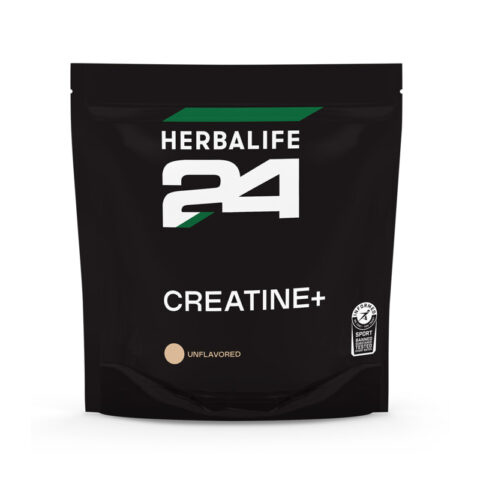
Herbalife24 Creatine+
Herbalife’s own product description for H24 Creatine+ explicitly states it can support energy production during high-intensity exercise and muscle strength when combined with resistance exercise, including in women and adults over 50 — directly in line with where the research above is heading.
Beyond creatine itself, the formula adds a B-vitamin complex and calcium — B-vitamins contribute to normal energy-yielding metabolism, and calcium contributes to normal muscle function, alongside its role in energy metabolism. The label’s own guidance is to use approximately 3.8g daily for at least 28 days to assess effectiveness — consistent with the “consistent daily use, no loading needed” approach the research supports.
Frequently Asked Questions
Is creatine safe for women?
Yes, for most healthy adults — it’s one of the most extensively studied sports supplements, with a strong safety record. Check with your GP first if you have kidney or liver disease, are pregnant or breastfeeding, or take regular medication.
Will creatine make me bulky?
No. Muscle growth comes from training, not the supplement itself, and women’s naturally lower testosterone makes significant bulk from creatine alone physiologically unlikely. Any early scale change reflects water stored in muscle, not fat.
Does creatine help with menopause symptoms?
Research specifically in peri- and post-menopausal women shows the clearest benefit for strength and lean mass when combined with resistance training. Evidence for mood and cognition is emerging but not yet conclusive.
How much creatine should I take?
The standard, well-evidenced dose is 3–5g of creatine monohydrate daily, with no loading phase required. Herbalife24 Creatine+’s own label suggests around 3.8g daily for at least 28 days to assess effect.
Is Herbalife24 Creatine+ vegan?
Yes, according to the official product description.
Can creatine treat depression?
No — some studies have explored creatine alongside standard antidepressant treatment in specific groups, but this doesn’t make creatine a treatment for depression on its own. Speak to a GP about any mental health concerns.
Sources & References
- Bupa UK — Top five predicted health trends for 2026 (Google search trend data)
- Smith-Ryan AE, et al. Creatine in women’s health: bridging the gap from menstruation through pregnancy to menopause. Journal of the International Society of Sports Nutrition. 2025;22(1):2502094
- Gutiérrez-Hellín J, et al. Creatine Supplementation Beyond Athletics: Benefits of Different Types of Creatine for Women, Vegans, and Clinical Populations. Nutrients. 2025;17(1):95
- Herbalife24 Creatine+ official product description, Herbalife Europe Limited
- EU Register of Nutrition and Health Claims — Commission Regulation (EU) No 432/2012 (B-vitamin and calcium claims)